If you keep dozing off before your bedtime dose, move it earlier: take it at the start of your evening routine, like right after dinner, not at lights-out. Whether a late or missed dose actually matters depends on the medication, so ask your pharmacist when you are not sure.
The real problem (and why most advice misses it)
Search this and you will mostly find articles about medications that keep you awake. That is the opposite of what is happening here. Your problem is that you fall asleep before the dose ever gets taken, and the alarm you swiped at 9 PM is long forgotten by morning.
You are not alone in this. The World Health Organization reports that adherence to long-term therapies averages only about 50% in developed countries, and bedtime doses are an easy one to lose. The fix is not "try to stay awake longer." It is changing when and how the reminder reaches you, plus knowing whether the slip even matters for your specific medication.
Does a late or missed night dose actually matter?
This is the part the generic advice skips. For some bedtime medications, the clock time is flexible, though the label may still have its own rule for a missed dose. For others, the evening timing was chosen on purpose, and a few are genuinely time-sensitive. Here is how the common cases break down.
| Type of night medication | How forgiving is it? | General approach if you fall asleep |
|---|---|---|
| Long half-life statins (such as rosuvastatin) | Forgiving. Timing is flexible. | Labels differ on a missed dose. The current Crestor and Lipitor labels say to take the next dose at the usual time. Ask your pharmacist. |
| Short half-life statins (such as simvastatin) | Evening is chosen on purpose. | Missing the evening window matters more. Ask your pharmacist. |
| Time-sensitive meds (such as antiseizure medicines) | Not forgiving. | Do not improvise. Call your pharmacist for that drug. |
The forgiving end. Some night medications are not fussy about the clock. The FDA label for rosuvastatin states it "can be taken with or without food, at any time of day", because its long half-life keeps it working across the full day. That line is about your regular dose, not a missed one, and labels differ on a missed dose. This rosuvastatin label says "take it as soon as you remember." It adds: "do not take 2 doses of rosuvastatin calcium tablets within 12 hours of each other." The current Crestor label says "take your next dose at your normal scheduled time. Do not take an extra dose of CRESTOR." The Lipitor (atorvastatin) label says "wait and take the next dose at your regular time." So if you crash before a long-acting statin dose, ask your pharmacist which instruction applies to yours. You can read more on how long atorvastatin stays in your system and the best time to take rosuvastatin.
The evening-on-purpose end. Other medications are timed for night for a reason. The FDA label directs patients to "take simvastatin tablets orally once daily in the evening," since a shorter-acting statin lines up best with the body's overnight cholesterol production. Here, sleeping through the evening dose matters more, so it is worth a quick word with your pharmacist about what to do.
The time-sensitive end. A few bedtime medications should never be guessed at. A 2023 study in Neurology found that the right way to handle a delayed or missed antiseizure dose "was dependent on the half-life of the ASMs in the individual patient." In other words, generic "just take it when you remember" advice does not apply. If you take a time-sensitive medicine like an antiseizure drug, call your pharmacist rather than improvising, and see our guide on a missed dose of lamotrigine for why these are different.
How to actually take your night dose
- Move the dose earlier in your evening. The simplest fix is to stop tying the dose to bedtime. Take it at the start of your wind-down, such as right after dinner or when you load the dishwasher, while you are still alert. For most once-daily medications a modest shift is fine, but confirm with your pharmacist if your medicine is time-sensitive. Our piece on how late a dose can safely slide covers the general idea.
- Anchor it to something you already do. Attach the pill to a fixed evening habit rather than a clock time you keep sleeping through. Building the dose into your routine is what makes it stick.
- Use an alarm you cannot doze through. A single notification is easy to swipe and forget when you are half asleep. A reminder that keeps going until you actually respond is the difference between "I meant to" and "I did."
- If you take it lying down, do it safely. Some medicines should not be taken right before lying flat. See whether you can lie down after taking medication.
- If you already fell asleep and woke up later, do not guess. Check whether it matters for your drug using the table above, and confirm whether you actually took it before taking another. When unsure, call your pharmacist.
This is the same routine fix that helps when your schedule slips in other ways, like staying on track on weekends or sorting out a dose taken at the wrong time of day.
How Pillo helps you not sleep through it
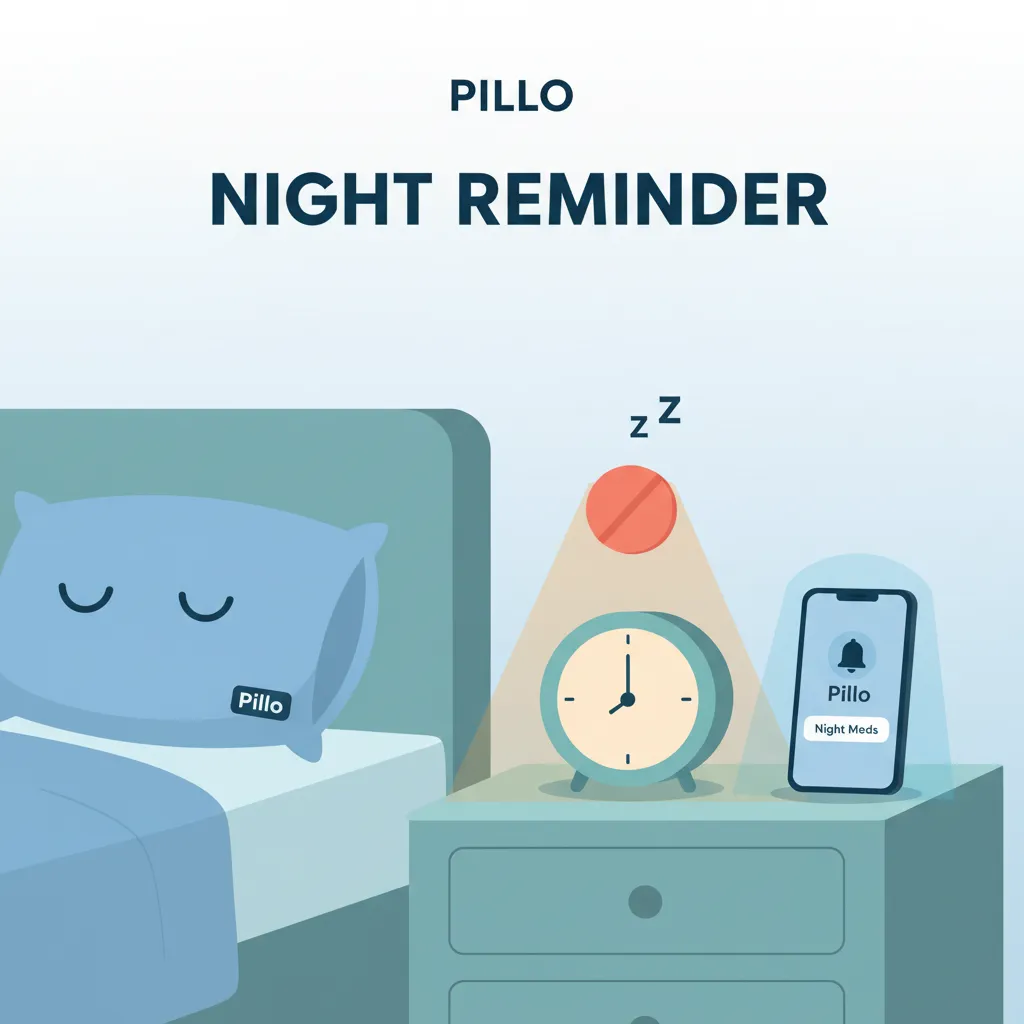
The reason bedtime doses get missed is simple: a normal phone notification is silent and easy to dismiss right as you are drifting off. Pillo's persistent alarm keeps prompting until you actually confirm the dose, so it does not quietly vanish while you fall asleep. You can also set the reminder for the start of your evening, not lights-out, so it reaches you while you are still up. And the dose log means that if you wake at 2 AM wondering whether you took it, you can check instead of risking a second dose.
That "keeps going until you respond" behavior is the whole point for night doses. Download Pillo on Google Play.
Frequently Asked Questions
I fell asleep and missed my night medication. Should I take it in the morning?
It depends on the medication, and even labels for the same drug differ. One rosuvastatin label says to take a missed dose as soon as you remember, but not 2 doses within 12 hours of each other. The current Crestor label says to take your next dose at your normal scheduled time. Time-sensitive medicines like antiseizure drugs are different and should not be guessed at. Do not double up, and ask your pharmacist for advice specific to your medication.
Why do I have to take some medications at night anyway?
Some are timed for the evening on purpose. Shorter-acting statins, for example, are labeled to be taken "in the evening" to match the body's overnight cholesterol production. Long-acting ones do not need that timing. Why your medicine is assigned to night is something your pharmacist can explain, and our morning versus night guide covers the basics.
How do I stop falling asleep before I take my pills?
Move the dose earlier so you take it while still alert, attach it to a fixed evening habit, and use a reminder that keeps prompting until you respond rather than a single easily-dismissed alert. Taking it right after dinner instead of at lights-out solves the problem for most people.
Is it bad to take my night medication too early?
For many once-daily medications, taking it a couple of hours earlier in the evening is fine and far better than missing it. Some medicines are more time-specific, so if yours has strict timing, check with your pharmacist before shifting it. Consistency from day to day matters more than the exact hour for most long-acting drugs.
This article provides general information about medication management and is not a substitute for professional medical advice. Always consult your doctor or pharmacist before making any changes to your medication schedule.