You can switch sertraline timing without a taper or skipped dose. Sertraline's 26-hour half-life keeps your blood level above 70 percent of steady state if you move 3 hours per day for 4 days instead of jumping to the new time. Direction depends on your symptoms: insomnia means switch to morning, daytime drowsiness means switch to night.
Why Switching Sertraline Is More Forgiving Than You Think
Most patients hear "antidepressant" and assume any schedule change needs careful tapering. That guidance applies to stopping sertraline, where missing days can trigger discontinuation symptoms. Shifting when you take it is a different question. Per the Pfizer Zoloft prescribing information, sertraline has an average terminal half-life of about 26 hours and reaches steady state after one week of daily dosing.
That long half-life is the safety net. Twenty-six hours means one dose covers more than a full day of absorption. Shifting your timing window by a few hours per day produces a small dip in your trough level, not a reset. Your brain does not lose the medication. It loses a small fraction of one dose's residual amount and recovers within 24 hours.
What it does not mean: that you can stop sertraline cold and restart whenever. That is a different scenario governed by Section 5.5 of the label on discontinuation syndrome, where gradual dose reduction is required to avoid nausea, dizziness, irritability, and dysphoria. Switching timing is not stopping. It is one continuous schedule with a slow time-of-day rotation.
First: Decide the Right Direction
Important: this protocol assumes you are already on a stable sertraline dose and your prescriber has approved a timing change. If you have not had that conversation yet, start there before continuing.
Before you start shifting, pick the direction your body actually needs. Sertraline causes both insomnia and daytime drowsiness, just at different rates. The 2023 dose-effect network meta-analysis in Sleep by Zhou et al. pooled 216 randomized controlled trials covering 64,696 patients and found sertraline associated with a somnolence odds ratio of 2.25 (95 percent CI 1.65 to 3.08) and an insomnia odds ratio of 1.67 (95 percent CI 1.36 to 2.05) versus placebo. The Pfizer label's Table 3 puts the absolute incidence at 20 percent insomnia (versus 13 percent placebo) and 11 percent somnolence (versus 6 percent placebo).
In plain terms: sertraline is more likely to disrupt sleep than to sedate, but a meaningful fraction of patients feel the opposite. Your switch direction depends on which group you are in.
| What you're feeling now | Likely cause | Switch direction |
|---|---|---|
| Trouble falling asleep, vivid dreams, restless nights | Evening dose peaking near bedtime | Night to morning |
| Daytime grogginess, sluggish mornings, post-lunch fog | Morning dose peaking during waking hours | Morning to night |
| Neither sleep nor drowsiness issues | Schedule is working | No switch needed unless lifestyle reason |
| Both insomnia and daytime drowsiness | Possibly dose-related, not timing | Call your prescriber first |
Lifestyle reasons count too. A new work shift, a partner whose alarm conflicts, a routine that just stopped fitting. If your current time is not working for a non-symptom reason, the same 4-day plan applies.
The 4-Day Plan
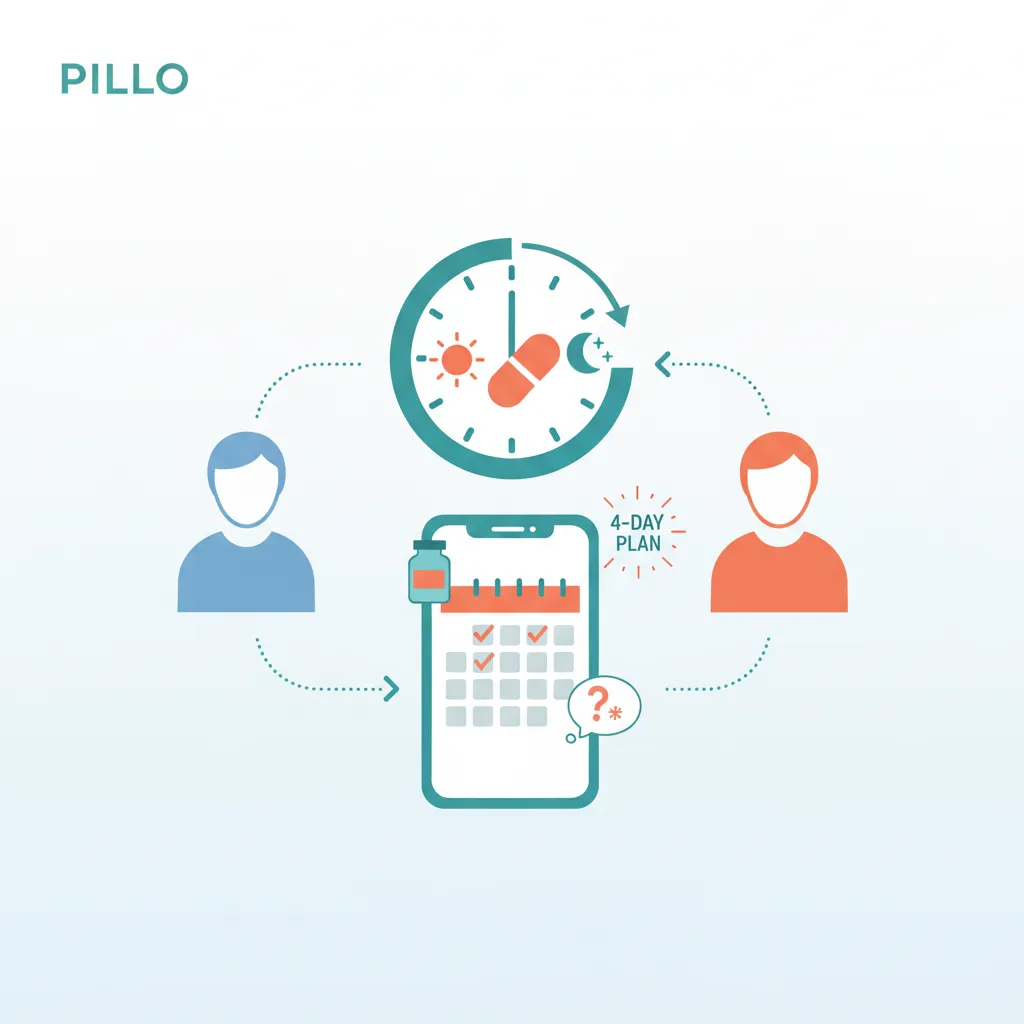
The goal is to move your dose by 3 hours per day until you reach the new time. Pick your start day on a stable schedule. Avoid starting the day before a long trip or a high-stress event.
| Day | If switching from 8 AM to 8 PM | If switching from 10 PM to 7 AM |
|---|---|---|
| Day 1 | 11 AM | 7 PM |
| Day 2 | 2 PM | 4 PM |
| Day 3 | 5 PM | 1 PM |
| Day 4 | 8 PM (new time, hold here) | 10 AM |
| Day 5 | 8 PM | 7 AM (new time, hold here) |
A 3-hour daily shift drops your trough concentration by roughly 8 percent for that day, then recovers as the next dose absorbs. That stays well inside the therapeutic window. A 12-hour jump in one day, by contrast, would drop your trough by about 27 percent, which is why people who try the cold-switch sometimes feel a one-day dip in mood or sleep quality.
Quick math behind the plan Sertraline's elimination follows first-order kinetics. The fraction of yesterday's level still present after a delay equals exp(-0.693 × delay_hours / 26). A 3-hour delay leaves 92 percent. A 6-hour delay leaves 85 percent. A 12-hour delay leaves 73 percent. The 4-day plan keeps every daily fraction above 90 percent, which is why no symptom break shows up.
Why You Don't Need to Skip a Dose
A lot of online advice says to "skip the old time and take it at the new time." That works because sertraline's half-life forgives one extended interval, but it produces a sharper trough drop than necessary. The 4-day plan smooths it out.
Skipping also creates a small risk on the next dose, since some patients feel a transient mood or sleep effect after a 36+ hour gap. The Pfizer label does not say how to move your dose to a new time of day. Its only related instruction is for a missed dose: "take the missed dose as soon as you remember. If it is almost time for the next dose, skip the missed dose and take your next dose at the regular time." So "skip and shift" is not label guidance, and neither is the 3-hour-per-day plan. That plan is our own arithmetic from the label's half-life, and it keeps you on one dose every day. Ask your prescriber or pharmacist before you change your dose time.
Patients in the elderly population have one extra wrinkle. The Pfizer label notes clearance is about 40 percent lower in older adults, with steady state taking 2 to 3 weeks. If you are over 65 or your prescriber has flagged slow metabolism, ask if a 5-day or 6-day plan with 2-hour daily shifts would be safer for you.
Edge Cases
Night shift workers. Anchor sertraline to your sleep period, not the clock. If you sleep 9 AM to 5 PM, your "morning" dose is around 5 PM (when you wake) and your "night" dose is around 8 AM. The 4-day plan still works, just translate the clock times accordingly.
Travel across time zones. For a 3 to 6 hour shift (e.g., New York to London), do a one-time partial shift on travel day. For an 8+ hour shift, run the 4-day plan starting on arrival day with shorter increments.
You missed one of the switch days. Do not double up. Take the dose at the closest planned time you can manage and continue the next day's planned time as scheduled. If the gap stretches past 36 hours, see our guide on what to do after a missed dose of sertraline.
You accidentally took two doses during the switch. Stop the switch, return to the schedule you were on, and follow the guidance in accidentally took double dose of sertraline before restarting the plan.
When to Call Your Prescriber
The 4-day plan is safe for most adults on a stable sertraline dose. Call your prescriber before you start if any of the following apply:
- You are within the first 4 weeks of starting sertraline or recently changed dose
- You have a history of bipolar disorder, mania, or hypomania
- You take an MAOI, lithium, tramadol, triptans, or other serotonergic drugs
- You take warfarin, NSAIDs, or other anticoagulants
- You are pregnant or breastfeeding
- Your dose is above 100 mg daily
During the switch, contact your prescriber if you experience new agitation, suicidal thoughts, severe headache, tremor, confusion, high fever, or persistent insomnia lasting beyond a week.
How Pillo Helps the Switch
Switching sertraline timing means changing the alarm time, then trusting yourself to stick to the new schedule for a week before evaluating. That is harder than it sounds. The old time is muscle memory, and a generic phone notification you can swipe away does not interrupt that muscle memory.
Pillo uses a persistent alarm that keeps firing until you log the dose. During a timing switch, that pattern fits the protocol well. You can schedule a 4-day shifting plan inside the app rather than reprogramming your alarm every morning. When you reach the new target time, the schedule view shows the steady cadence so you can confirm you are holding it before deciding whether the switch worked.
If you also want to see a structured plan for switching other medications, our how to switch medication times guide covers the same principle for drug classes outside the SSRIs. For other timing-switch examples, see switching blood pressure meds from night to morning. And if you are still deciding whether morning or night is right for you in the first place, start with sertraline morning or night before running the protocol on this page.
Frequently Asked Questions
Can I switch sertraline from morning to night in one day?
You can, and many patients do without symptoms. Sertraline's 26-hour half-life makes one extended interval forgiving. However, a single 12-hour shift drops your trough concentration by about 27 percent for one day, which can produce a brief mood or sleep dip. The 4-day plan above keeps the daily drop under 8 percent and avoids that bump. If your prescriber has not said otherwise, the slower version is the lower-risk option.
How long should I wait before deciding the new timing isn't working?
At least 7 to 14 days at the new time. Steady state on the new schedule takes about a week per the Pfizer Zoloft label, so anything before day 7 reflects transition, not the real effect of the new timing. If you still feel worse after 14 stable days at the new time, call your prescriber rather than switching back on your own.
What if I switch from night to morning and now I'm drowsy in the afternoon?
Daytime drowsiness with a morning dose is the most common reason patients switch back to evening. The Pfizer label puts the incidence at 11 percent. Try the switch in reverse using the same 4-day plan, or call your prescriber if the drowsiness is severe or interferes with work.
Will I get withdrawal symptoms during the switch?
No. The 4-day plan keeps you on a continuous daily dose, so there is no withdrawal. Discontinuation syndrome only happens when sertraline is stopped or reduced, not when the time of day shifts. If you feel withdrawal-like symptoms (dizziness, brain zaps, nausea) during the switch, you are likely missing a dose rather than shifting it. Check your log and contact your prescriber.
Can I switch zoloft from morning to evening the same way?
Yes. Zoloft is the brand name for sertraline. The 4-day plan is identical regardless of brand or generic. Different manufacturers may have slightly different inactive ingredients, but the half-life and steady-state behavior are the same.
Can I take sertraline at completely irregular times each day?
No. Sertraline relies on consistent dosing intervals to maintain steady state. Switching the time of day in a controlled 4-day plan is fine. Random daily variation is not, and over time it can produce uneven serum levels that mimic missed doses. Pick a target time and hold it.
Will switching sertraline timing affect how well it works?
No, as long as you stay on a daily dose throughout the switch. The 4-day plan keeps daily trough drops under 8 percent, which is well inside the therapeutic window. If you still feel worse after 7 to 14 stable days at the new time, the new time itself may not suit you. That is different from the medication losing efficacy.
A Note on Safety
If remembering doses is the hard part, a pill reminder app that keeps alarming until you respond can take that job off your plate.
This article provides general information about medication timing and is not a substitute for professional medical advice. Always consult your doctor or pharmacist before making changes to your medication schedule, especially if you take other prescriptions or have any of the conditions listed in the "When to Call Your Prescriber" section above.
Sertraline-specific dosing decisions belong with your prescriber. The 4-day plan is a structure for how to execute a switch your prescriber has approved, not authorization to start one on your own.