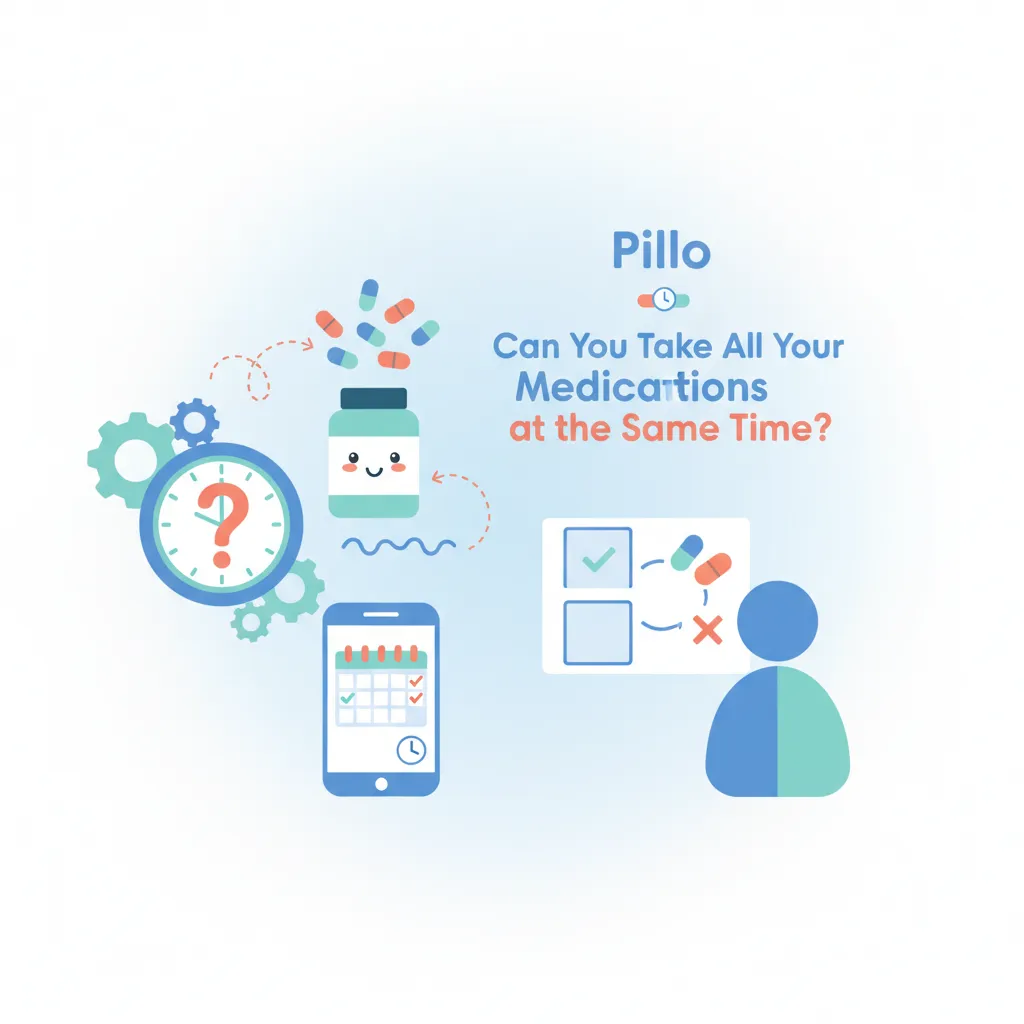
It depends on the medications. Many common prescriptions are safe to take together, but some interact in your stomach and must be spaced hours apart to work properly. The table below shows which combinations need spacing and which do not. When in doubt, ask your pharmacist.
Why taking multiple medications together can be risky
If you take several medications each day, you're in good company. A 2023 study found that 44.1% of adults over 65 in the U.S. now take five or more medications daily, nearly double the rate from two decades ago. For people with heart disease, that number jumps to 61.7%.
The interaction numbers are worse than you'd think. In one hospital-based study of patients on five or more drugs, 95% had at least one potential drug-drug interaction, averaging 5.9 interactions per person. Adverse drug events send an estimated 4 out of every 1,000 Americans to the emergency department each year, and drug-related problems in outpatient settings cost an estimated over $177 billion annually.
The more medications you take, the higher your risk of harmful interactions. That includes prescription drugs, over-the-counter meds, and dietary supplements, which many people forget to mention to their doctor.
So can you take all your medications at the same time? Sometimes, yes. But it depends on what kind of interaction is involved.
Two types of drug interactions that affect timing
Not all drug interactions work the same way. The FDA identifies three categories of drug interactions: drug-drug, drug-food, and drug-condition. When it comes to timing, two types matter most:
Absorption interactions (spacing helps)
These happen in your stomach and gut. One medication physically blocks another from being absorbed into your bloodstream. For example, calcium binds to thyroid medication in your digestive tract, reducing its absorption by 20-25%.
The fix: take them at different times. Once each medication absorbs separately, they work fine in your body.
Pharmacological interactions (spacing does NOT help)
These happen after both medications reach your bloodstream. They interact at the receptor or chemical level inside your body, so it doesn't matter how far apart you take them. The interaction still occurs.
For example, taking a blood thinner like warfarin with an NSAID like ibuprofen increases your bleeding risk regardless of timing. These combinations need your doctor's guidance, not just a different schedule.
If the interaction is absorption-based, spacing solves it. If it's pharmacological, talk to your doctor or pharmacist.
Medication spacing table: which combinations need time apart
This table covers common drug combinations that need spacing due to absorption interactions. Always confirm your specific medications with your pharmacist.
| Medication A | Medication B | Why they interact | Minimum spacing |
|---|---|---|---|
| Thyroid medication (levothyroxine) | Calcium supplements or antacids | Calcium reduces thyroid med absorption by 20-25% | 4 hours apart |
| Thyroid medication (levothyroxine) | Iron supplements | Iron chelates (binds to) thyroid medication | 4 hours apart |
| Thyroid medication (levothyroxine) | Antacids (aluminum/magnesium) | Antacids bind to thyroid medication in the GI tract | 4 hours apart |
| Iron supplements | Calcium supplements | Calcium reduces iron absorption | 2 hours apart |
| Iron supplements | Antacids | Antacids reduce iron absorption | 2 hours apart |
| Iron supplements | Certain antibiotics (tetracycline, fluoroquinolones) | Mutual absorption reduction via chelation | 2 hours apart |
| Calcium supplements | Tetracycline antibiotics | Calcium chelates antibiotics, reducing effectiveness | 2-4 hours apart |
| Calcium supplements | Fluoroquinolone antibiotics (e.g., ciprofloxacin) | Calcium reduces ciprofloxacin absorption by ~40% | 2-4 hours apart |
| Calcium supplements | Osteoporosis medications (bisphosphonates like alendronate) | Calcium blocks bisphosphonate absorption | 30-60 min; take bisphosphonate first on empty stomach |
If you take levothyroxine, the general rule: take it first thing in the morning on an empty stomach, then wait at least four hours before taking calcium, iron, or antacids.
For vitamins and supplements, iron and calcium are the biggest troublemakers. If you take both, separate them by at least two hours.
Combinations where spacing won't help
These are pharmacological interactions. They happen in your body, not your stomach. Spacing them apart will not reduce the risk, and these need medical oversight.
| Medication A | Medication B | Risk | What to do |
|---|---|---|---|
| Blood thinners (warfarin) | NSAIDs (ibuprofen, naproxen) | Increased bleeding risk | Avoid combination when possible; talk to your doctor |
| ACE inhibitors (e.g., lisinopril) | Potassium supplements or potassium-rich foods | Risk of dangerously high potassium | Only combine under medical monitoring |
| SSRIs (antidepressants) | Serotonergic drugs (tramadol, dextromethorphan) | Risk of serotonin syndrome | Avoid combination; alert your doctor |
| Statins (simvastatin, atorvastatin) | Grapefruit juice | Grapefruit increases statin levels in blood | Avoid grapefruit entirely on these statins |
If you take blood pressure medications like lisinopril, be cautious with potassium supplements or potassium-heavy salt substitutes. And if you're on a statin like atorvastatin, check with your pharmacist about grapefruit.
Always consult your doctor or pharmacist before combining medications. They can check your full medication list for both types of interactions.
How to build a safe medication schedule
If you're managing multiple medications, here's how to build a schedule that accounts for spacing requirements.
Step 1: Sort your medications into groups
Go through your medication list and identify which ones need spacing. Your pharmacist can help. A typical grouping looks like this:
- Morning, empty stomach: thyroid medications, bisphosphonates
- Morning, with breakfast: most blood pressure meds, metformin, statins
- Midday or afternoon: iron supplements, calcium (if you also take empty-stomach meds)
- Evening: medications prescribed for nighttime
Step 2: Identify conflicts
Look for combinations from the spacing table above. If your thyroid medication and calcium supplement are both in your morning routine, one of them needs to move.
Step 3: Create time windows
Instead of trying to take everything at once, set up 2-3 daily time windows. Here's an example:
- 6:00 AM: Thyroid medication (empty stomach)
- 8:00 AM: Blood pressure meds, diabetes meds (with breakfast)
- 2:00 PM: Iron or calcium supplements
- 8:00 PM: Evening medications
This works well if you're already on a twice-daily or three-times-daily schedule. If you need to rearrange when you take your meds, do it gradually and with your pharmacist's input.
Step 4: Set reminders for each time window
A schedule only works if you actually follow it. You need something that keeps you on track, especially when spacing rules make your routine more involved than "take everything at breakfast."
If you can't remember whether you've taken your meds, that's a sign your current system needs an upgrade.
Using Pillo for spaced medication schedules
If your schedule has multiple time windows with spacing rules, a single daily alarm won't cover it. Pillo lets you set separate persistent alarms for each window (say, 6 AM for thyroid, 8 AM for breakfast meds, 2 PM for supplements), and the alarm won't stop until you acknowledge it.
It also handles regimens where meds are taken at different times on different days, so you don't need to keep the whole schedule in your head. You can track pill counts with refill reminders, and if you can't take a med right when the alarm fires, set a custom snooze for the exact time you need.
Frequently asked questions
Can I take all my morning medications at once?
It depends on what you're taking. Many common prescriptions like blood pressure pills, diabetes meds, and cholesterol drugs are generally safe to take together at breakfast. But if you also take thyroid medication, calcium, or iron, some of those need to be spaced apart. Check the spacing table above or ask your pharmacist to review your full list.
What happens if I accidentally take two medications that interact?
For absorption interactions (like calcium and thyroid meds taken together), you may get a weaker dose of one medication that day. For pharmacological interactions, the risk depends on the specific drugs and dosages. Contact your pharmacist or doctor to ask what to do next. Call 911 or Poison Control (1-800-222-1222) if you have unusual symptoms.
How do I find out if my medications interact with each other?
Your pharmacist is the best resource. They can run an interaction check on your full medication list, including supplements. You can also use drug-food interaction checkers online, but always verify results with a healthcare professional.
Is it OK to take vitamins with prescription medications?
Not always. Supplements can interact with prescription drugs in ways you might not expect. Iron and calcium are the most common culprits. They can block absorption of thyroid meds, antibiotics, and other prescriptions. Tell your doctor and pharmacist about every supplement you take.
Should I take medications with food or on an empty stomach?
It varies by medication. Some drugs absorb better with food, while others need an empty stomach. For details, check our guides on when to take medication with food and what happens if you take medication with food instead of on an empty stomach. Your pharmacist can tell you the best approach for each of your prescriptions.
This article is for informational purposes only and does not replace professional medical advice. Drug interactions can vary based on your specific medications, dosages, and health conditions. Always consult your doctor or pharmacist for advice specific to your medications before making changes to your medication schedule.
Reviewed under our Medical Review Policy.