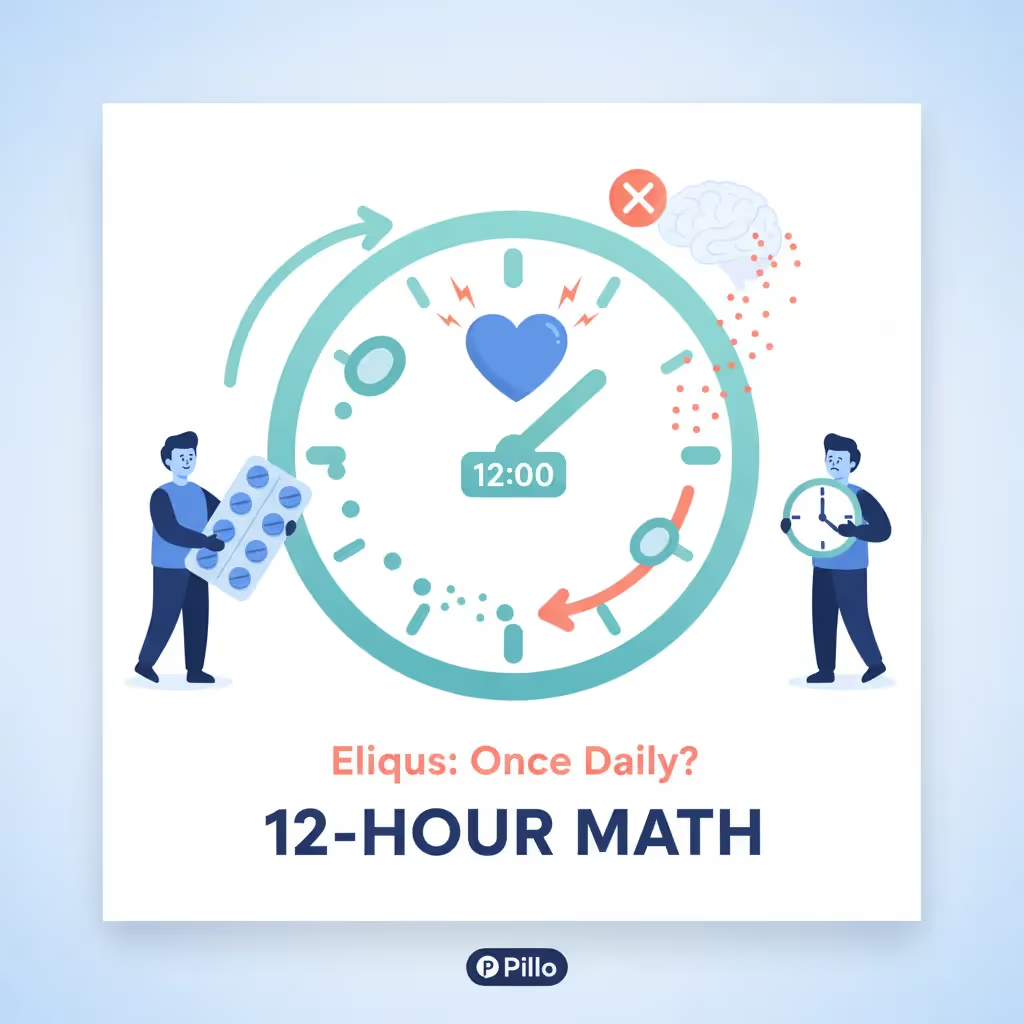
Eliquis is designed for twice-daily dosing, every 12 hours. Taking it once a day leaves you unprotected for half of every cycle, which raises stroke and clot risk. The FDA-approved schedule, the half-life behind it, and the trial that proved it works are all built on a twice-daily routine.
Why Eliquis Has to Be Twice a Day
Eliquis (apixaban) has a half-life of about 12 hours, according to the FDA prescribing information. Half-life is the time it takes for half the drug to leave your bloodstream. So 12 hours after a dose, you have roughly half the protection. After 24 hours, you have about a quarter.
That math is why the label says twice a day. A second dose at the 12-hour mark refills the tank before the level drops too far. Skip that second dose, and the back half of your day looks more like "no anticoagulant" than "anticoagulant."
For comparison, Xarelto (rivaroxaban) is dosed once a day for atrial fibrillation because it works differently in the body. Eliquis is not interchangeable. Each blood thinner has its own schedule for a reason.
What the Trial Actually Tested
Eliquis was approved for stroke prevention in atrial fibrillation based on the ARISTOTLE trial (Granger et al., NEJM 2011), which enrolled 18,201 patients. The result that put Eliquis on the map: a 21% relative reduction in stroke or systemic embolism compared with warfarin (1.27% per year vs 1.60% per year, hazard ratio 0.79).
Every patient in that trial took apixaban twice a day, either 5 mg or 2.5 mg. Once-daily dosing was not tested. There is no clinical trial showing Eliquis works at once-daily dosing for AFib stroke prevention. The convenience of once-daily is real, but the efficacy evidence is not.
A 2014 meta-analysis in PLOS ONE covering 71,683 patients across four DOAC trials concluded that twice-daily DOAC dosing offers a "more balanced risk-benefit profile" for stroke prevention. The American College of Cardiology has made the same point: more constant levels of anticoagulation, the kind you get from twice-daily dosing, suit higher-risk patients.
What Once-Daily Looks Like in Your Bloodstream
| Hours since last dose | Approximate drug level | What this means |
|---|---|---|
| 0 (just took it) | 100% (peak) | Full protection |
| 12 (next BID dose due) | ~50% | Steady-state floor on twice-daily |
| 18 | ~30% | Below the level studied in ARISTOTLE |
| 24 (skipped second dose) | ~25% | Sub-therapeutic; clot risk rises |
These numbers are simplified, but the pattern is real. Once you're past 18 hours without a dose, you're outside the steady-state window the trial actually proved.
What to Do If You've Been Taking It Once a Day
If you've been on a once-daily schedule, talk to your doctor or pharmacist before changing anything. Do not double up to "catch up." The FDA missed-dose rule is clear: take the missed dose as soon as you remember on the same day, then resume twice-daily. Do not take two doses at once.
If cost is the reason you're stretching pills, ask your pharmacist about manufacturer co-pay programs or generic apixaban. If forgetting the evening dose is the issue, the fix is the reminder system, not the dosing schedule. Our guide on why missing a blood thinner raises stroke risk covers what's at stake when even one dose slips. For the broader picture on dosing-frequency confusion, see our piece on twice-a-day medication and the 12-hour rule.
If you have already missed a dose today, our walkthrough on a missed dose of Eliquis tells you exactly what to do next. And if you accidentally went the other direction, taking a double dose of Eliquis covers that scenario too.
How Pillo Helps With the Evening Dose
Twice-daily dosing fails most often at the second dose, especially for people who are tired, busy with dinner, or just out of routine. Pillo uses persistent alarms that keep ringing until you confirm the dose, which is the opposite of a phone notification you can swipe and forget. For a drug where the 12-hour gap is the whole point, that difference matters. You can also see our companion guide on the best time to take apixaban to lock in a schedule that works with your life.
Frequently Asked Questions
What happens if you take Eliquis only once a day?
Drug levels drop below the therapeutic range for part of every 24-hour cycle. The 12-hour half-life means once-daily dosing leaves you with roughly a quarter of peak levels by hour 24. Stroke and clot risk go up. Talk to your doctor before changing any blood thinner schedule.
Can my doctor prescribe Eliquis once a day instead?
Not for atrial fibrillation, deep vein thrombosis, or pulmonary embolism. The FDA-approved label for those conditions is twice daily. If your doctor wants to simplify your schedule, the conversation is usually about switching to a different blood thinner like rivaroxaban, not about taking Eliquis less often.
Why is Xarelto once a day but Eliquis twice a day?
Different drug, different behavior in the body. Rivaroxaban (Xarelto) has dosing studied at once daily for AFib. Apixaban (Eliquis) was studied and approved at twice daily. They are not interchangeable. The difference is built into how each drug was developed and tested.
What if I forget my evening Eliquis dose?
Take it as soon as you remember on the same day, then go back to your regular twice-daily schedule. Do not take two doses to make up for one you missed. Our full missed-dose guide for Eliquis walks through the timing details.
Is once-a-day Eliquis ever appropriate?
There is no FDA-approved indication for once-daily Eliquis at this time. Any deviation from the twice-daily schedule should come from your prescriber, not from a pill-stretching strategy or a forgotten dose pattern.
This article provides general information about medication management and is not a substitute for professional medical advice. Always consult your doctor or pharmacist before making changes to your medication schedule.
Reviewed under our Medical Review Policy.